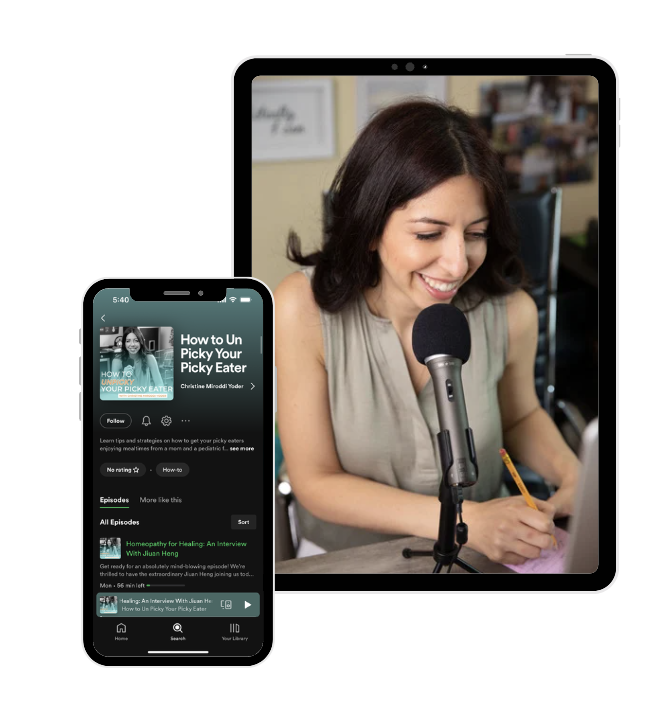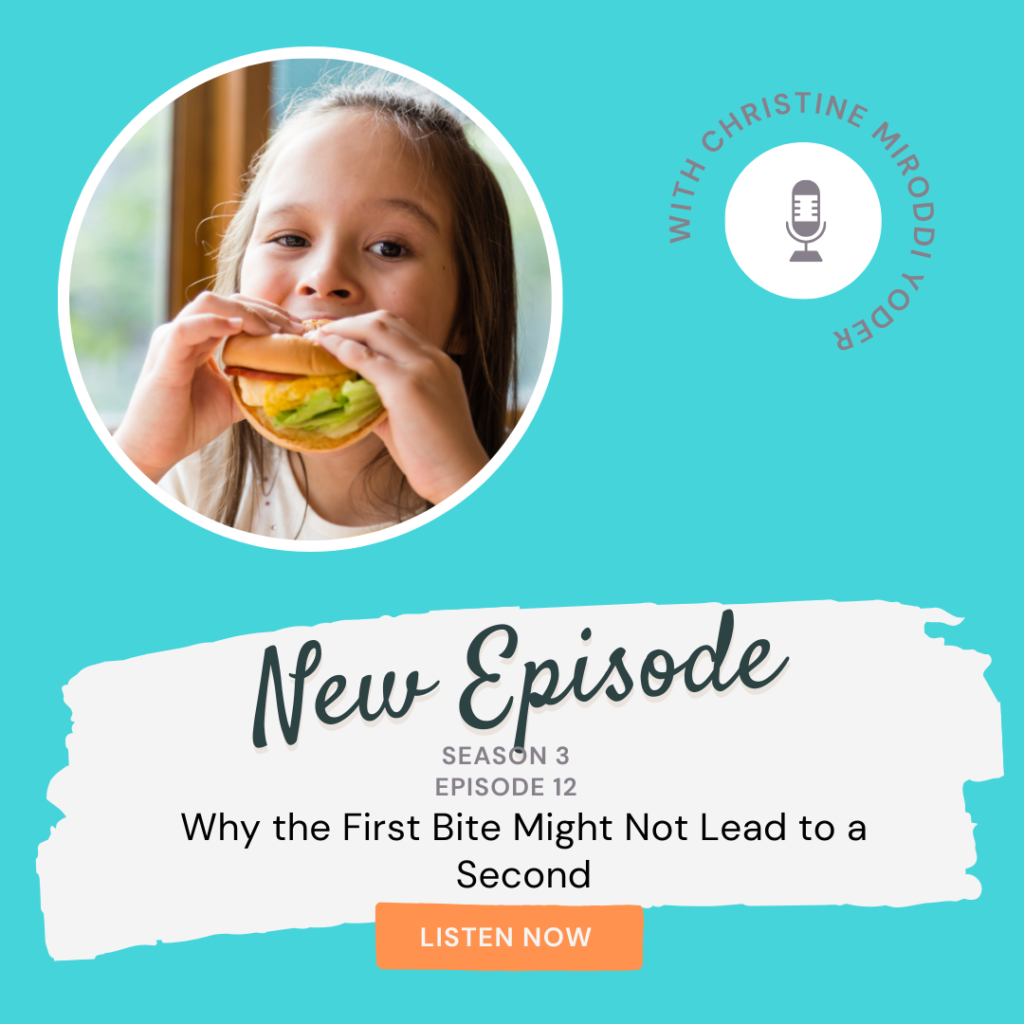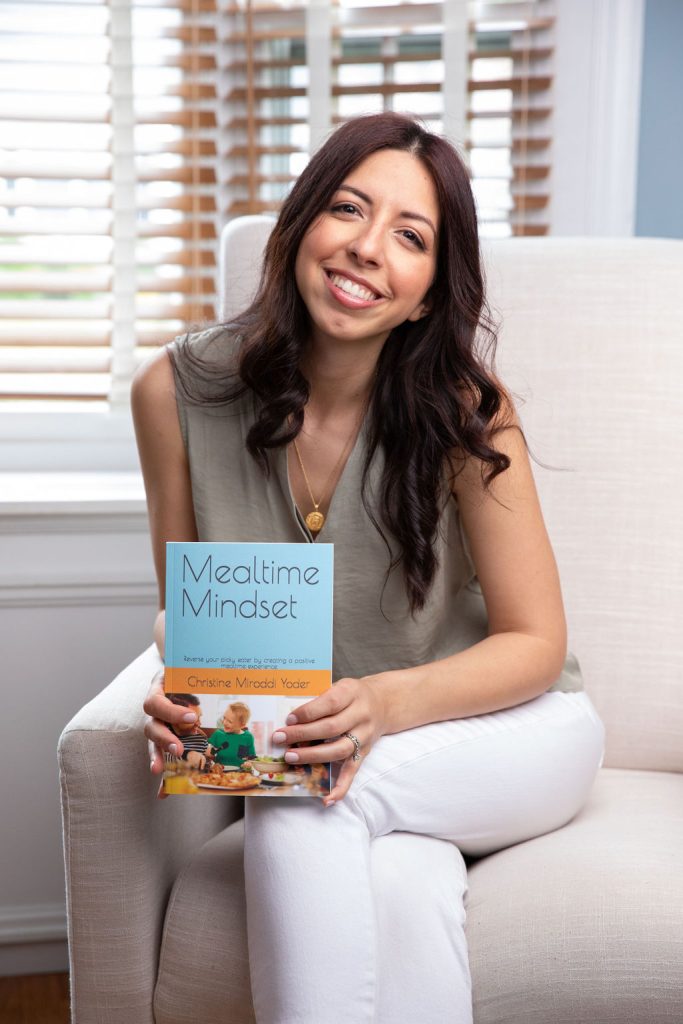


Is your child a picky eater? Maybe they are fussy about trying new foods or actually have a fear of trying new foods. In this podcast, we learn tips and strategies on how to get your picky eaters enjoying mealtimes by shifting mindset, working with their sensory system, improving their oral motor skills, remediating gut issues and more. Your host is a mom and a pediatric feeding therapist with extensive training in oral motor, speech, sensory feeding, mindset, and nutrition. We talk everything from breastfeeding to detoxing and everything in between! Support this podcast: https://podcasters.spotify.com/pod/show/christine-miroddi-yoder/support
I chose baby-led weaning with my son because I thought it would help prevent picky eating.
At first, it seemed like it worked. Luke ate meat, vegetables, fruit, and the same foods we were eating. But he also gagged—a lot. I had been told that gagging was normal, so I assumed the struggle meant he was learning.
Then the foods began disappearing.
The foods that required the most chewing went first. Over time, Luke gravitated toward pouches, puffs, meltables, yogurt melts, and other foods that were easier and more predictable for his mouth to manage.
He ate everything—until he didn’t.
Now I’m introducing solids to my daughter, and I’m doing things very differently. I’m not following traditional baby-led weaning. I’m giving her tiny, soft, manageable pieces, introducing a wide variety of flavors and textures, and focusing less on how much she eats.
Instead, I’m creating what I call “food experiences.”
In this episode, I’m sharing what I couldn’t see during Luke’s early feeding journey, what I understand now as a pediatric feeding therapist, and why I believe some babies may need more support than “hand them the food and let them figure it out.”
We’ll talk about:
Why eating a food does not always mean a baby has mastered the skills needed to eat it comfortably
The oral-motor skills required to bite, chew, move, gather, and swallow food
The difference between occasional gagging and a repeated pattern of stressful feeding experiences
Why the most difficult foods may be the first ones a child eventually drops
How oral-motor difficulty can make softer, dissolvable, and predictable foods feel safer
What I mean by a “food experience”
How I’m preserving my daughter’s independence and autonomy without following strict baby-led weaning
Why I’m offering broad variety in small, manageable doses
Why the amount a baby eats is not the only—or even the best—measure of progress
How to challenge a baby’s skills without making every meal feel like a test
This is not an anti-baby-led-weaning episode.
Baby-led weaning can work beautifully for many babies, and research does not show that it broadly causes picky eating. My concern is what may happen when the difficulty of the food repeatedly exceeds the skills of the baby eating it.
BLW does not create an oral-motor problem—but it may reveal one.
When a baby regularly experiences gagging, fatigue, frustration, or difficulty managing food, we shouldn’t automatically assume that every struggle is simply part of learning. Sometimes, the baby may be working much harder than we realize.
My theory is that for some children, enough difficult experiences may eventually teach the nervous system that eating is hard. What looks like picky eating later may partly be that child choosing foods their mouth already knows how to manage.
This time, I’m not loyal to baby-led weaning, traditional spoon-feeding, or any other feeding label.
I’m following the baby in front of me.
This episode reflects my personal experience and clinical perspective. It is not individualized medical or feeding advice. Food size alone does not determine safety. Texture, shape, softness, positioning, developmental readiness, and the individual baby’s feeding skills all matter. Speak with your pediatrician or a qualified feeding professional if your baby regularly coughs, chokes, gags intensely, appears distressed, has difficulty chewing or swallowing, or is not progressing with textures.